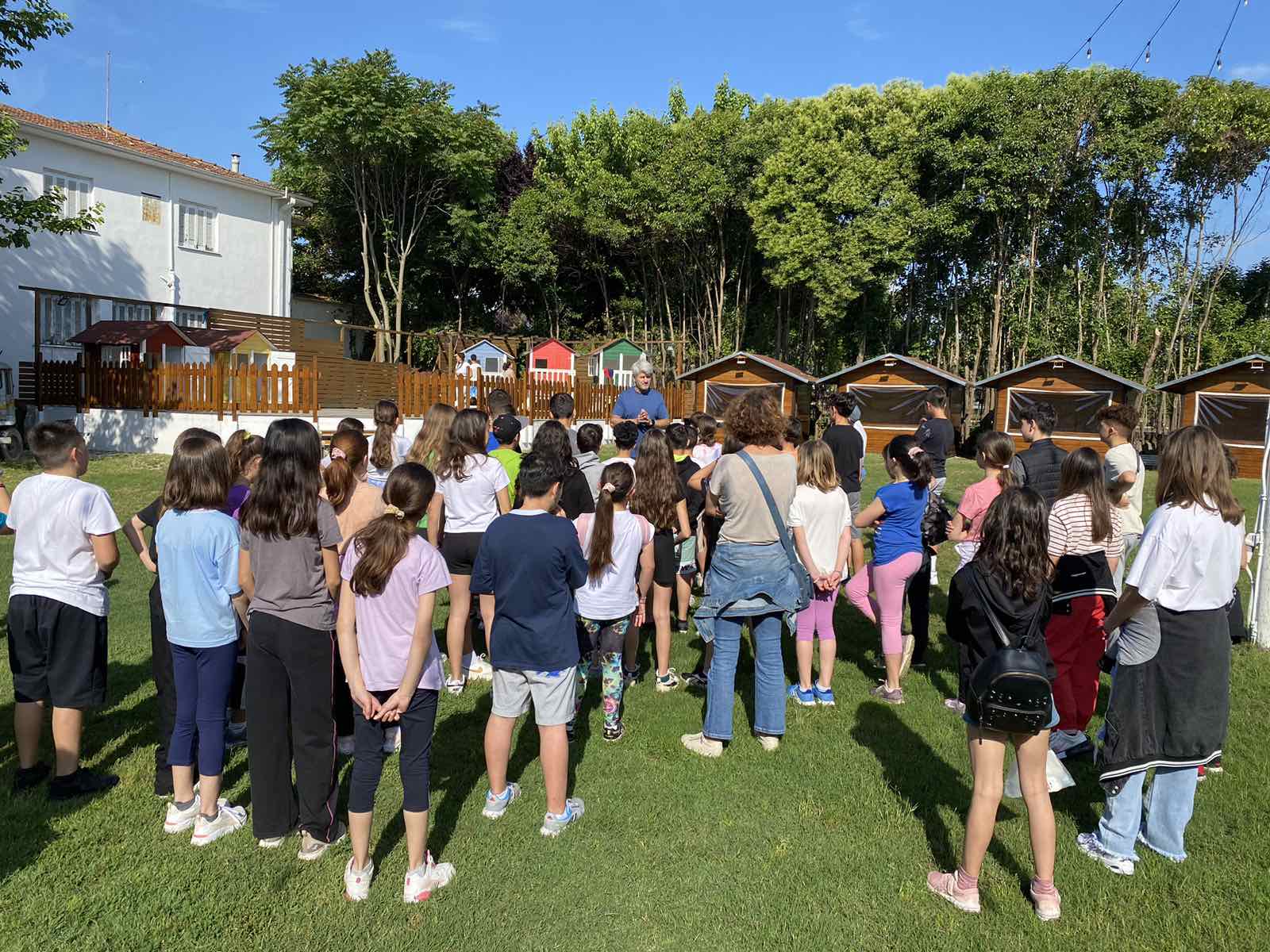
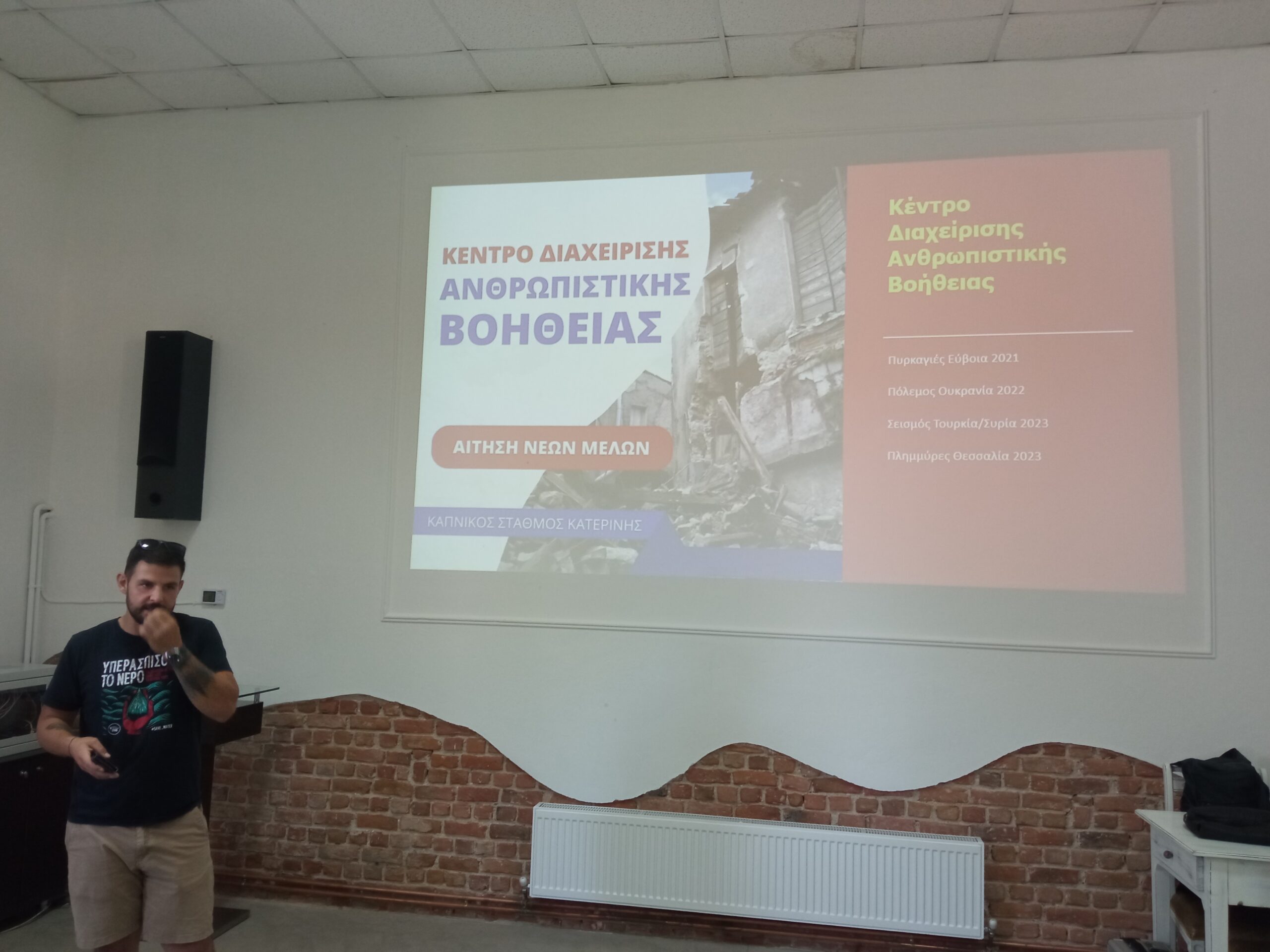
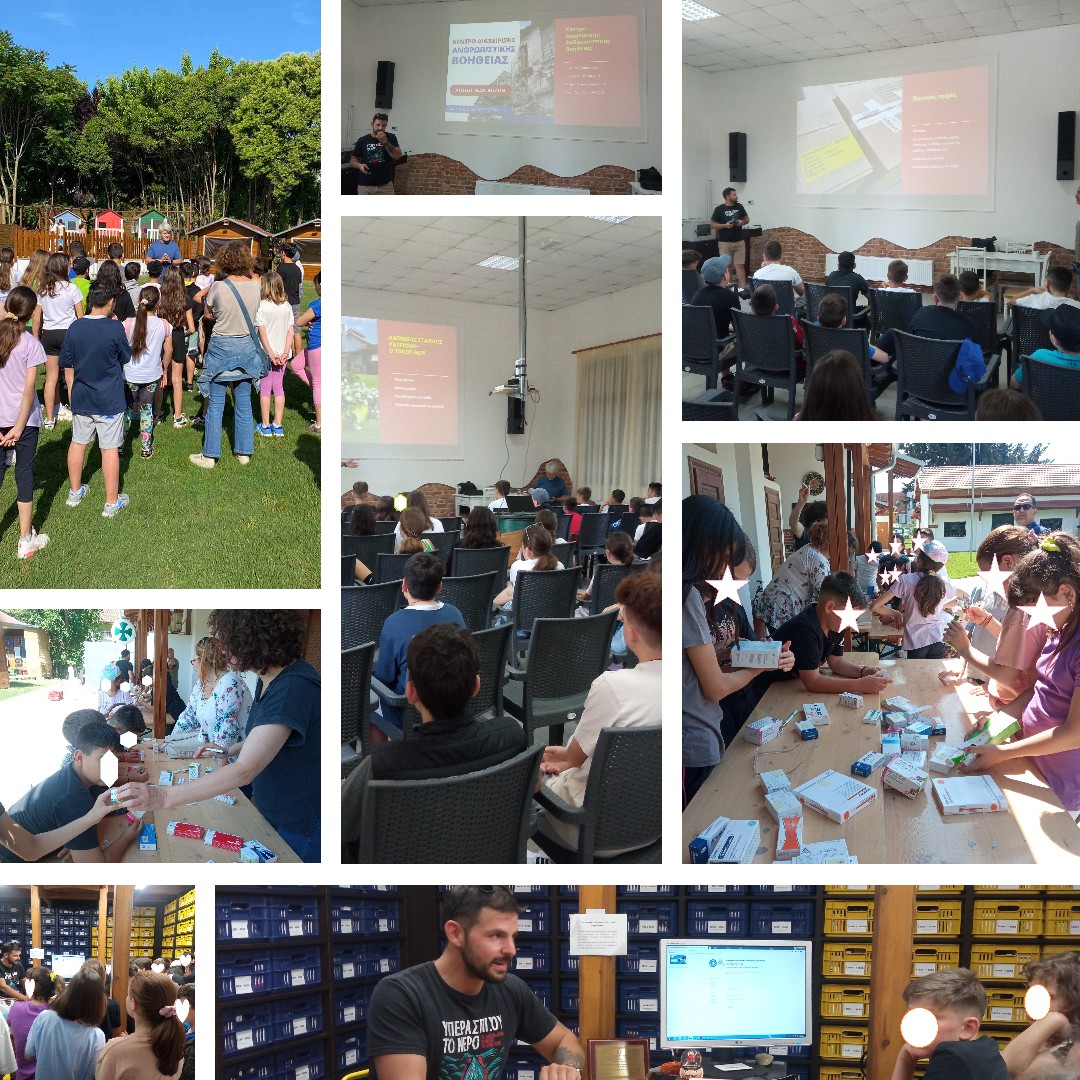
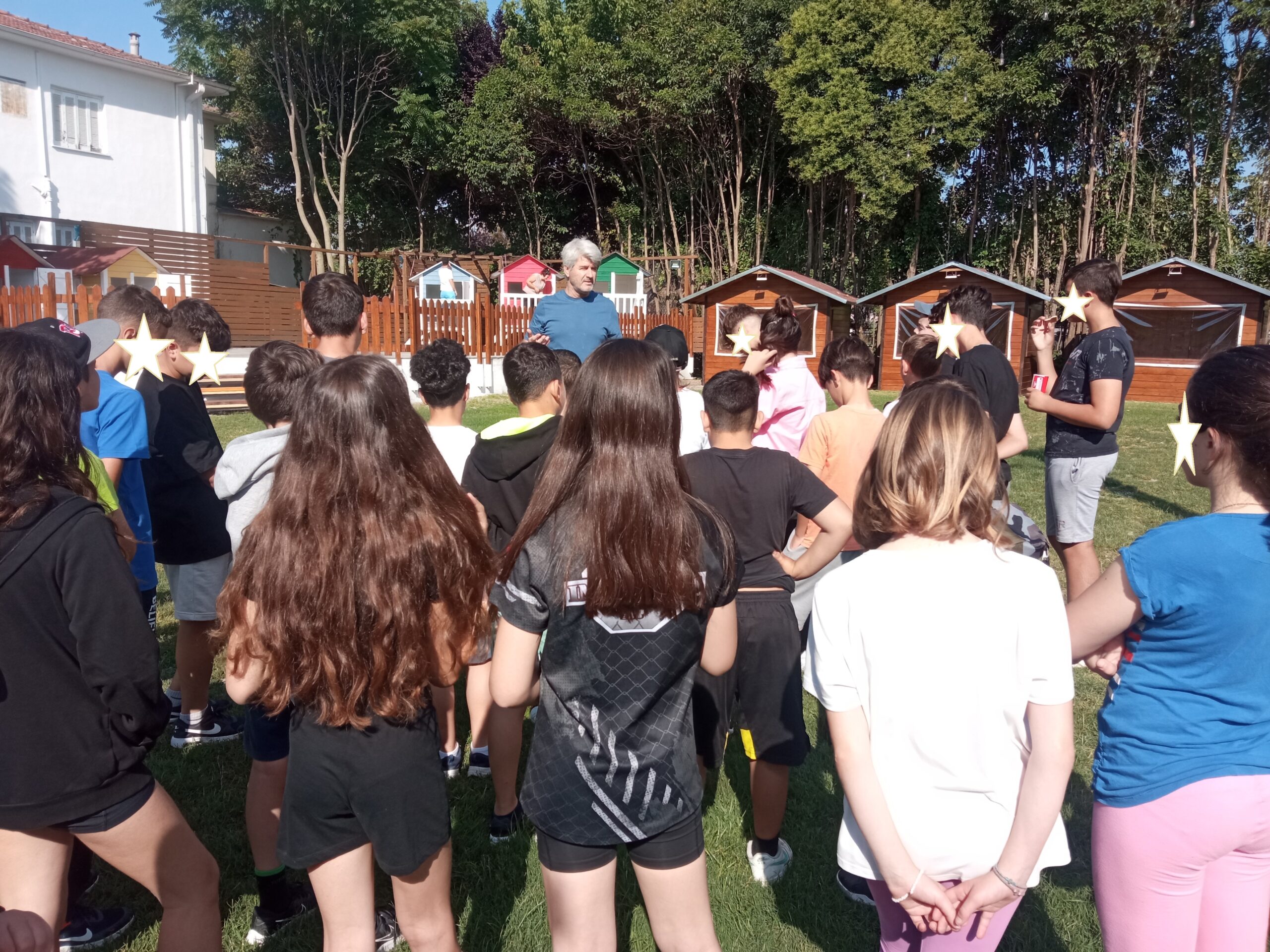
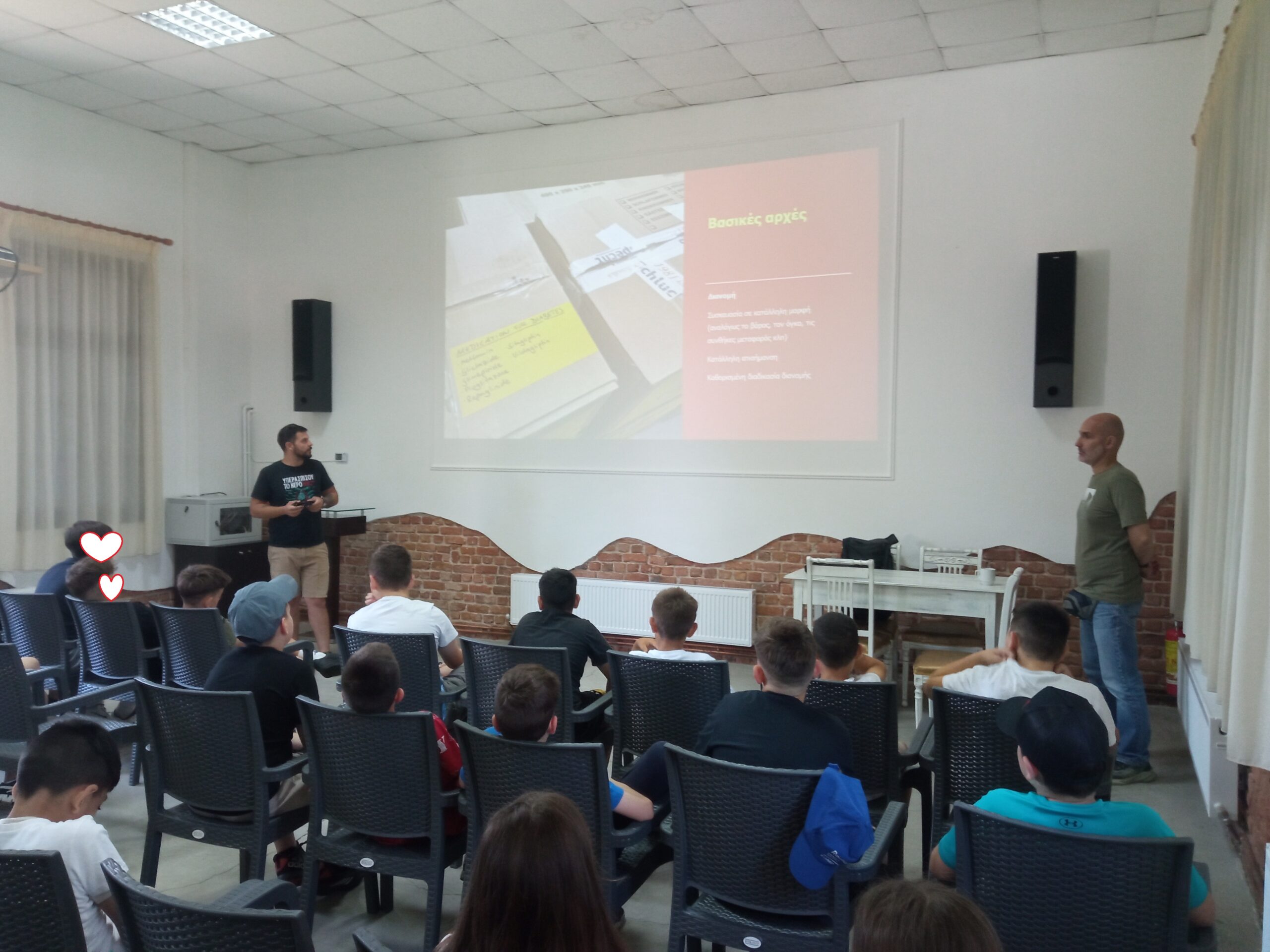
On Wednesday, May 29th, we welcomed the students of the 5th and 6th grades of the 19th Primary School of Katerini to the “Kapnikos Stathmos of Katerini” (KSK) for the implementation of a workshop regarding the digital applications used by the KSK for the organization, support, and coordination of volunteer activities. Initially, the students were informed by the responsible Mr. Ilias Tsolakidis about the history of the KSK and the work it performs, and then they were informed about the digital applications it uses.
We attended:
- the presentation of an application in which the KSK records and classifies various materials and goods (food, hygiene items, clothing, etc.) collected through donations and contributions from citizens and the local community, with the aim of supporting the Social Grocery of KSK. The Social Grocery supports families and fellow citizens who do not have the financial means to purchase basic necessities.
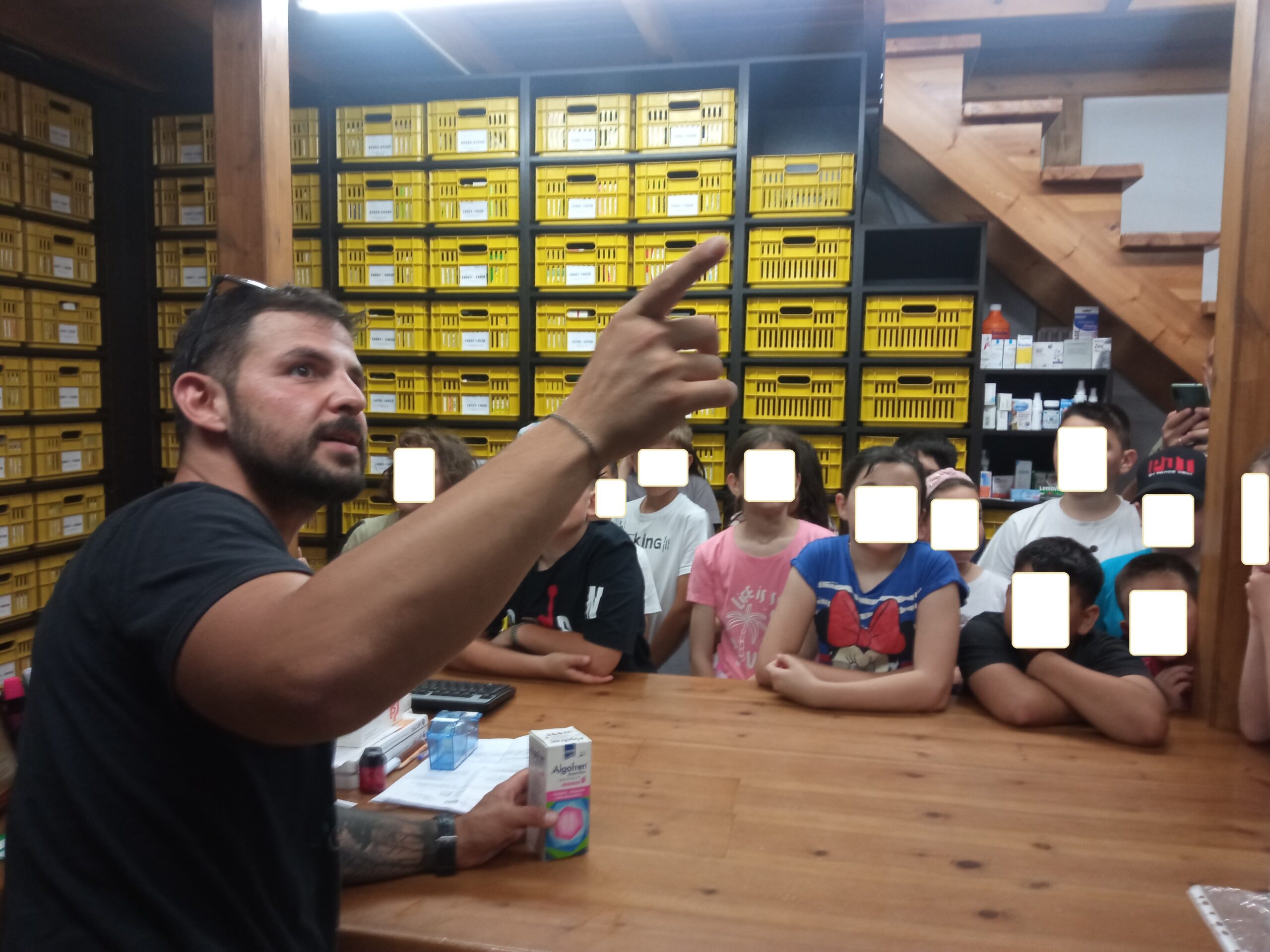
- Another very interesting application that was presented to us is the system for recording medicines received by KSK from citizens, which are used to operate its Social Pharmacy of KSK. These are medications from our homes that citizens donate to KSK when they no longer need them, so that they can be used by people who need them and cannot afford to obtain them (those who are uninsured or do not have the financial means to buy them). In this particular information system, each medication is recorded so that the person responsible for managing the Social Pharmacy can always know the quantity of each drug (active substance) available, as well as which shelf and box it is stored in.
- Finally, we saw the digital application used for the financial management of KSK. In this application, all of KSK’s income from donations or European programs is recorded, as well as its expenses, along with the necessary supporting documents (receipts and invoices for both income and expenses). This ensures complete transparency in financial management.
Finally, the students helped us sort and classify the medicines they had already collected at their school and brought to the “Kapnikos Stathmos”.